Games·terminal·MIT
cc-arcade
Nine games and a pet above the prompt, playable while Claude works. Zero tokens.
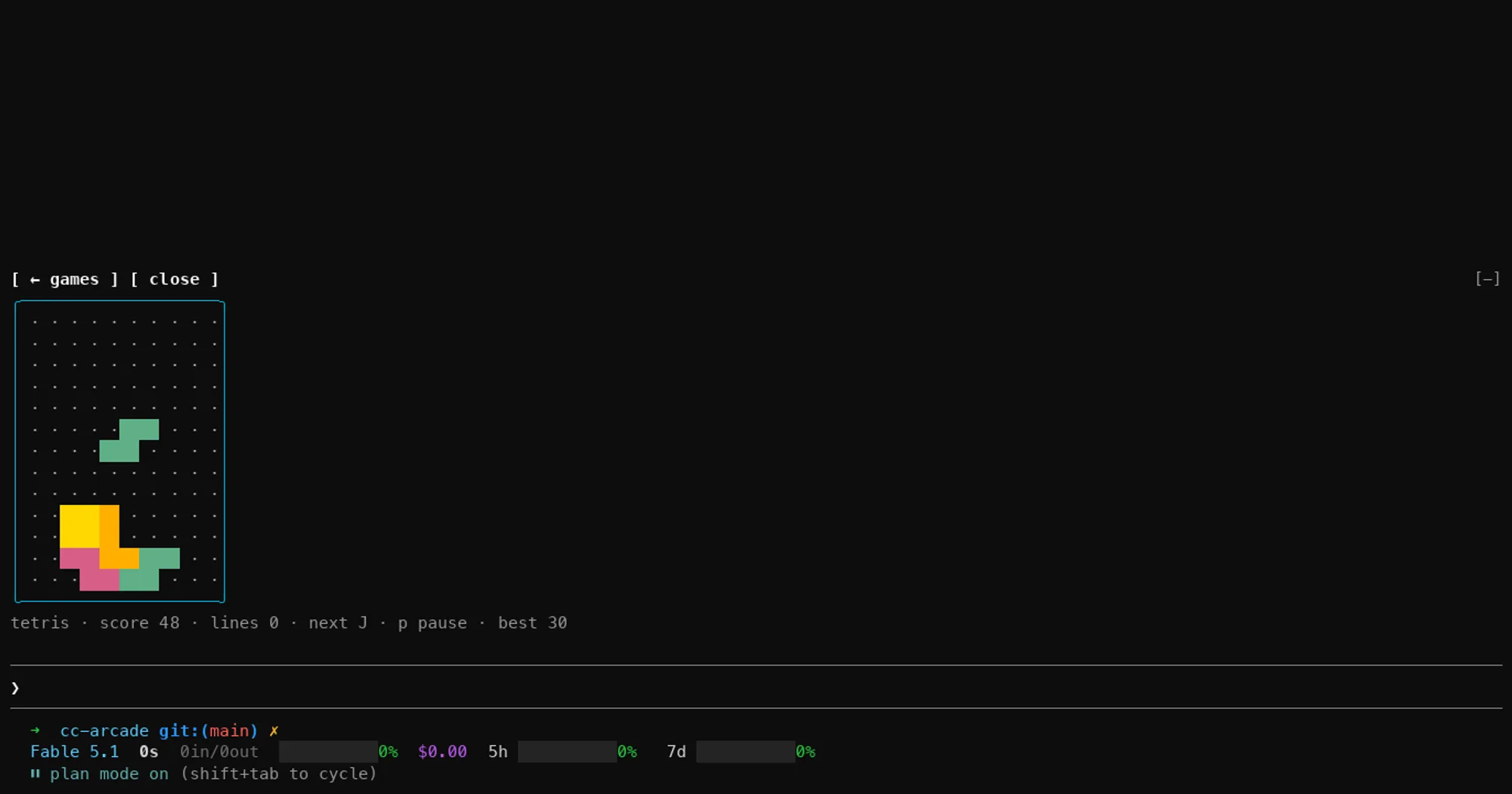
cc-arcade puts a game above the Claude Code prompt for the minutes Claude spends working. Run /arcade, click a game, and play. When Claude’s turn finishes, the game pauses and its status line says so. Nothing here asks the model anything, so playing costs zero tokens.
What it does
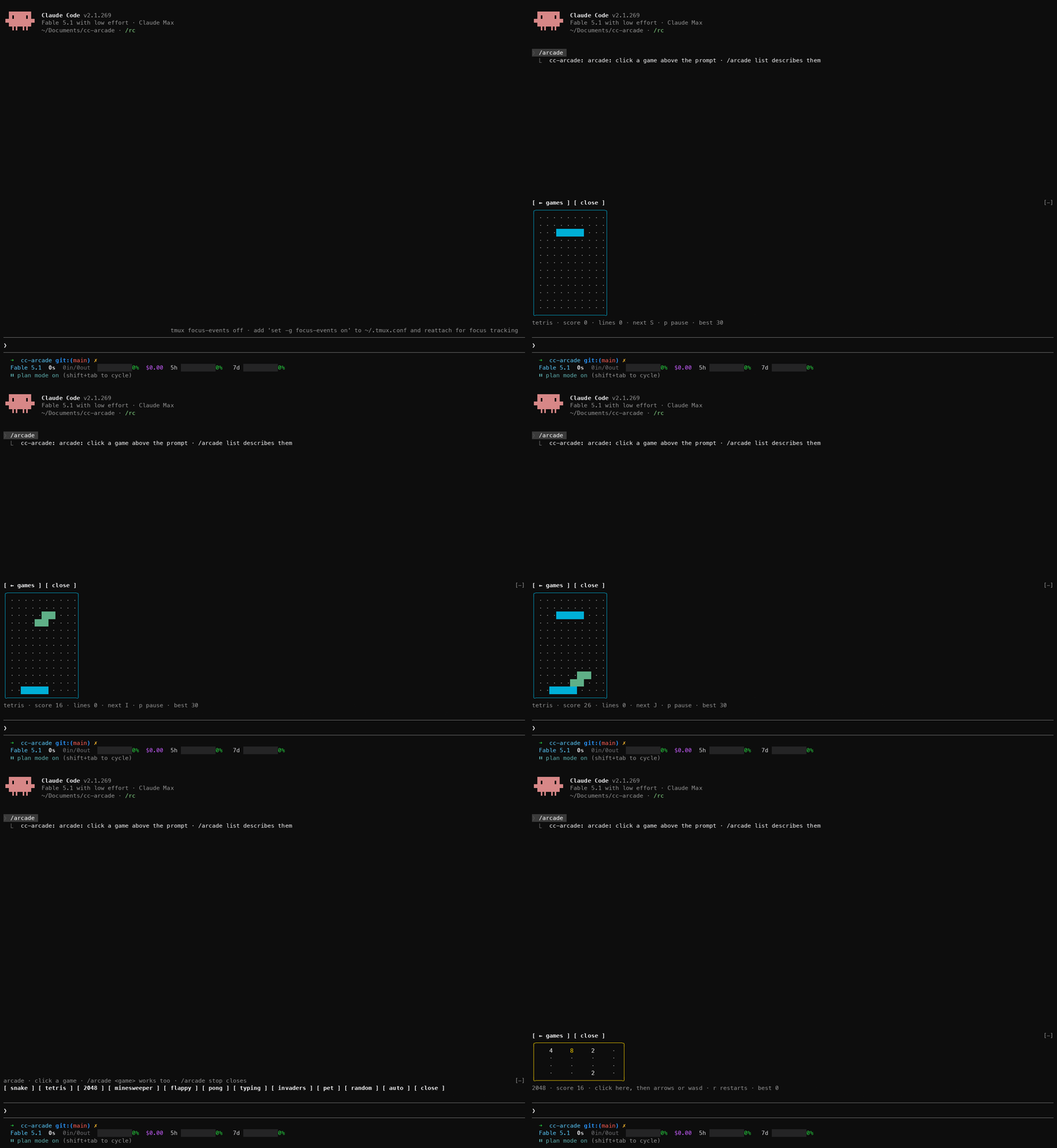
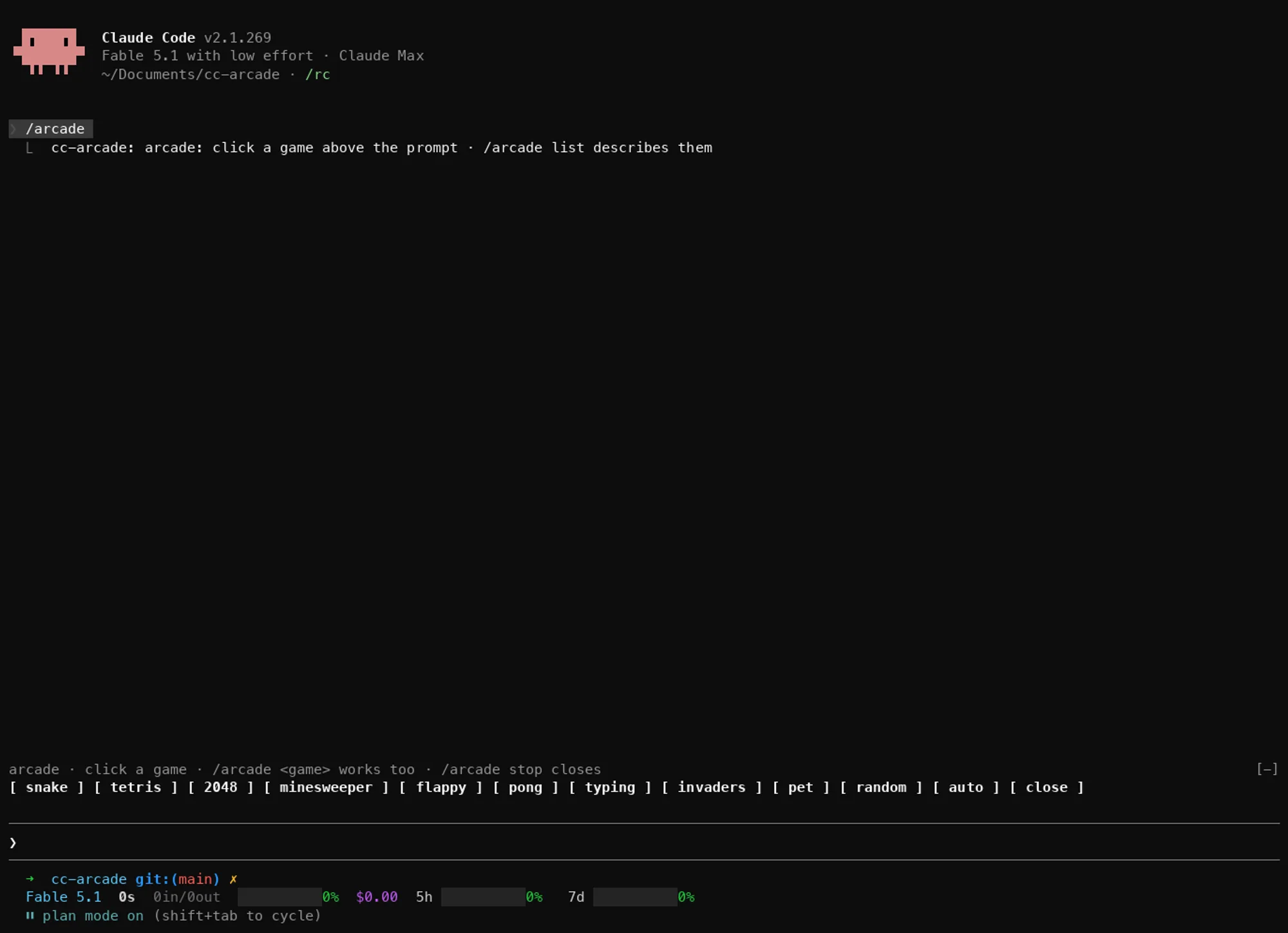
- Nine games: Snake, Tetris, Doom, 2048, Minesweeper, Flappy, Pong, a typing test and Space Invaders. Doom is a small first-person corridor shooter with four floors, three monsters and three weapons, drawn with half blocks. The levels are the author’s own, not id Software’s.
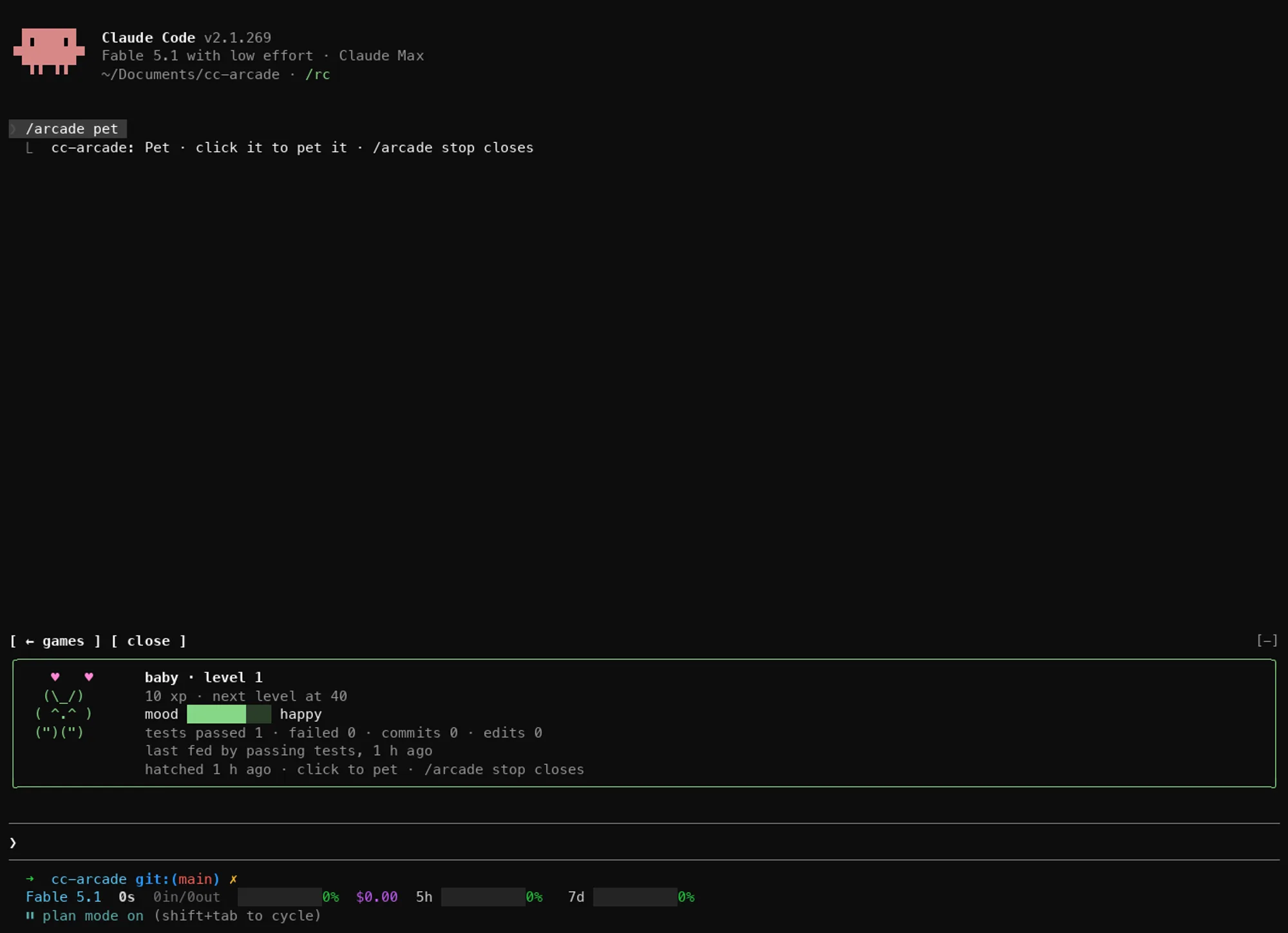
- A pet that grows with Claude’s work. Passing tests, commits and file edits feed it, and it survives restarts.
- Best scores per game, kept across sessions.
/arcade listshows them. /arcade autopicks a game for the moment: a quick round while Claude is on a short turn, something deeper once the turn has run over a minute, the pet after a failed test run./arcade colorblindswitches Doom to a palette that does not rely on red against green.
Install
Needs Claude Code 2.1.269 or later with function hooks enabled, an interactive terminal, and a terminal that reports the mouse.
claude plugin marketplace add sezaakgun/cc-arcade
claude plugin install cc-arcade@cc-arcade
Start claude and run /arcade. Click a board to give it the keyboard. Esc gives the keyboard back to the prompt.
How it works
The plugin draws in the band Claude Code gives plugins above the prompt, about half the terminal height, and redraws ten times a second (Doom twenty). Each board is a Client module with its own frame clock, keyboard and mouse, so input never goes through the model.
To feed the pet it hooks every tool call, which means it sees each Bash command and whether the call failed. It keeps counters only: no command text, file path or prompt is stored, and it makes no network calls. Scores and the pet live in Claude Code’s plugin store on your machine.
Limitations
- Draws only in interactive terminal sessions. Nothing appears in
claude -p, the desktop app or mobile. - One game at a time, and a board only gets the keyboard after a click.
- The games are clones of the genre. The author states they are not affiliated with Tetris Holding, Taito, Atari or id Software.
More mods
The whole directory →
cc-pokedex
Creatures spawn from your prompts. Catch them and raise a partner as Claude works.
claude plugin install cc-pokedex@cc-pokedex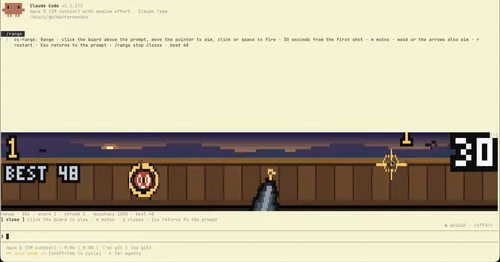
cc-range
A pixel-art shooting gallery above the prompt, playable while Claude works. Zero tokens.
claude --plugin-dir ./cc-range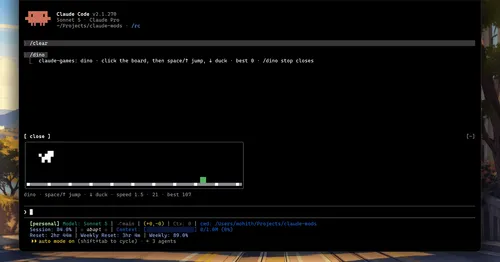
claude-games
Four games above the prompt that react to Claude's tests and commits. Zero tokens.
claude plugin install claude-games@claude-gamesagent-flow
Every subagent of the session in a live tree beside the transcript. Zero tokens.
claude plugin install agent-flow@claude-agent-flow