Dashboards·terminal · desktop · mobile·MIT
Flightdeck
Subagents, permission checks, advisor consults, context and cost, live in a pane.
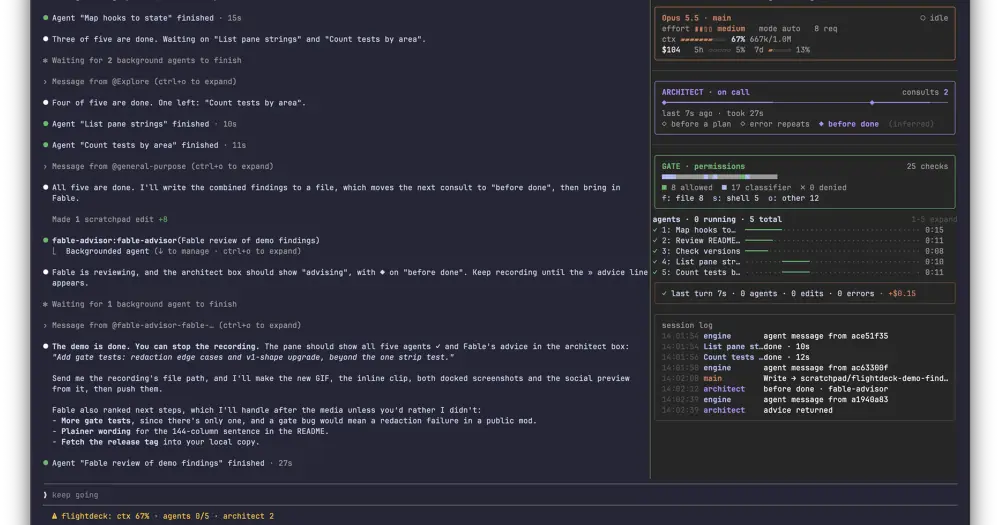
Flightdeck (claude-flightdeck on GitHub) is a Claude Code mod for multi-agent sessions: a live dashboard pane with the main model’s context, cost and rate limits, every permission check, each subagent as a card or a swimlane, and every consult with an advisor or architect agent.
At a glance
- Shows: context, cost and rate limits, permission checks, subagents, advisor consults, a receipt for each turn and a session log.
- Where: beside the transcript in a fullscreen terminal, or as an 8-row summary above the prompt. It also draws in Claude Desktop’s Code tab, but not in the VS Code extension’s chat panel.
- Cost: zero tokens. It calls no model, makes no network requests and touches no files.
- Privacy: it reads tool inputs and the start of your prompts, masks credentials, keeps nothing after the session and never blocks anything.
- For: sessions with subagents, an advisor agent or auto mode, where the transcript alone no longer tells you who is doing what.
What it shows
The pane stacks up to seven panels. Panels with nothing to show take no room, so a session without subagents gets just the main box and the log.
- Main. Model, effort, permission mode and request count; a context gauge with the number of compactions; the session cost and the first two rate-limit windows, when your plan reports them, with the time until each resets from 56 columns wide. A
last reqline gives the latest main-loop request’s time to first token and tokens per second. - Architect. Tracks consults with a reviewer: any subagent whose type matches
advisor|architect(a regex you can change), or a server-side tool such as Claude Code’sadvisor. A timeline shows each consult, whether one is running, how long the last took and, for a subagent architect, the first line of its advice. - Gate. One coloured cell per permission check: allowed by a rule, decided by the auto-mode classifier or by you and then run, still pending, or denied. Checks made inside a subagent are dimmed. Totals per family (file, shell, other) open a drill-down with the last five checks and their verdicts.
- Agents. Subagents as cards side by side, three by default: the task, type, live context and output tokens, steps, a running clock, and
max_tokensin red when a request hits it. More agents than fit switch to swimlanes on one time axis. - Loops. Model loops that belong to no card, such as workflow agents, compactions and memory forks.
- Receipt. The running turn, or the last one: duration, agents spawned, edits, errors and the cost it added.
- Log. Prompts, spawns, completions, consults, edits, errors and denials. While you view one subagent’s transcript, the log shows only that agent.
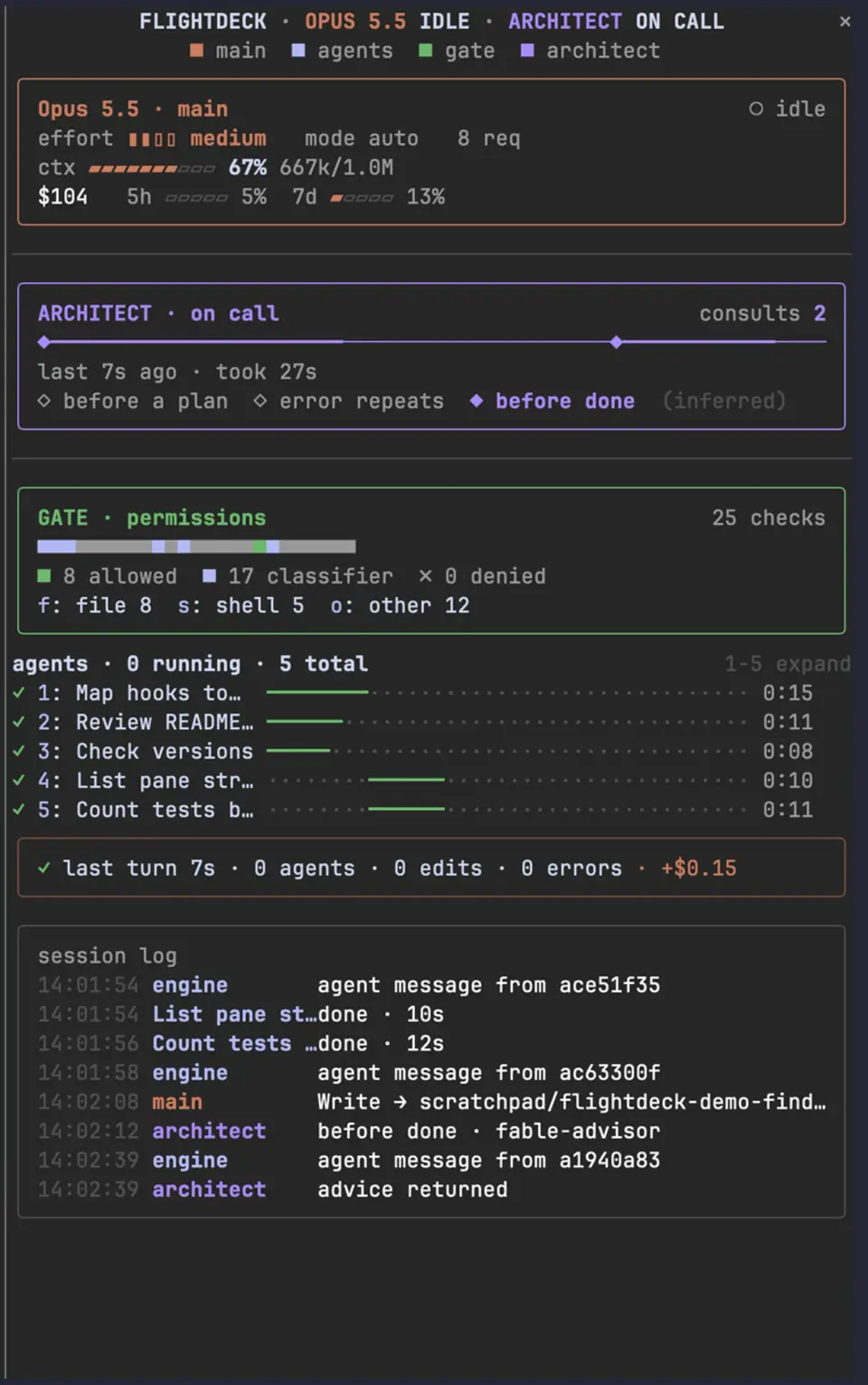
Connectors between the panels animate only while work is running. The mod also adds a status line entry with the context, running agents, consults and denials.
In a fullscreen terminal the pane docks beside the transcript, in two columns from 110 columns wide. On the terminal’s main screen it sits above the prompt as a summary of at most 8 rows, with up to three agents:

cctop covers similar ground with more on rate limits and tool latency, plus a companion binary. Flightdeck puts subagents, permission checks and advisor consults first, and needs nothing outside the plugin.
Commands and keys
/flightdeckopens the pane,/flightdeck closecloses it, and/flightdeck layout auto|compact|wide|minioverrides the layout for the session./flightdeck resetclears agents, checks, consults, the log and the turn; cost, rate limits and compactions stay./clearresets the pane too.ctrl+x tabfocuses the pane. Then a digit expands an agent’s card or lane (full task, last three tool calls, start of its answer), andf,soroopens the gate drill-down for file, shell or other tools.
Settings
Change options in /config: panels hides or reorders panels, maxCards (1 to 6) sets the cards before swimlanes, architectPattern decides what counts as the architect, motion: off stills the connectors, palette: pastel helps when theme colours read badly, and statusLine and openOnStart turn those off.
In settings.json they go under pluginConfigs["flightdeck@claude-flightdeck"].options. A user found that the README’s plain flightdeck key is ignored without a warning on Claude Code 2.1.308.
Install
Needs Claude Code 2.1.287 or later.
claude plugin marketplace add scasella/claude-flightdeck
claude plugin install flightdeck@claude-flightdeck
Inside Claude Code, /plugin marketplace add scasella/claude-flightdeck and /plugin install flightdeck@claude-flightdeck do the same. Run /reload-plugins, then /flightdeck. The installer may say config options are not set; the defaults work. From then on the pane opens by itself when a session starts in a terminal at least 144 columns wide; below that width, /flightdeck opens it.
How it works
Flightdeck only watches. Each of its 15 hooks passes its event on unchanged, so it never denies, rewrites or delays a tool call, a prompt or a subagent.
To fill the panels it sees every tool call’s name and input, every permission verdict, subagent spawns with their token usage and final answers, the first 70 characters of each prompt, and the context, cost and rate-limit readings. It spots server-side advisor calls in the assistant’s messages, where their content is encrypted. The request speed is timed as the response streams past Flightdeck’s own hook, so it includes other plugins’ hooks, the engine and the network: a measurement, not the API’s own figure.
What it keeps are short summaries in session state, such as a tool name with a path or command. Credentials (bearer tokens, API keys, KEY= variables, passwords in URLs) are masked before anything is stored. The README says it makes no network requests, runs no processes, touches no files, calls no model and keeps nothing across sessions. The hooks module bears this out: the only engine methods it calls are the clock, session usage, command registration, the pane and the status line.
What’s new in 0.4.0
Version 0.4.0 (12 October 2026) added the reset countdown and the last req speed line to the main box, the second at a user’s request.
What people say
We found no Reddit or Hacker News threads about Flightdeck yet. Users report what they hit in the repo’s issue tracker:
- VS Code shows nothing. A Windows user saw the hooks fire in the VS Code extension but no pane, and an unrelated mod behaved the same (issue #5). Anthropic’s documentation agrees: that chat panel runs mod hooks without drawing them, so use Claude Code in the integrated terminal.
- Desktop has a rough edge. In Claude Desktop’s Code tab the gate strip can run past its border once it fills; fixes are open (PR #10, PR #11), as is one for a pane that sometimes goes blank (PR #12).
- Early compaction skews the gauge. With
autoCompactWindowset, the gauge still uses the model’s full window: on a 1M model set to compact at 400k, it reads 40% just before compaction (issue #9). - Resumed subagents look finished. An agent resumed with
SendMessagekeeps its done card and frozen clock while it works again (issue #8).
Limitations
- Some labels are inferred, not measured. The moment of each consult (before a plan, after repeated errors, before done) is guessed from the turn’s edits and errors and marked
(inferred);moments: falsehides it. - A server-side advisor’s advice is encrypted, so the pane counts and times those consults but cannot show what they said.
- An agent’s
ctxis its latest request’s whole input, not a cost: the API reports no cost per agent. - The loops panel cannot tell a workflow agent from a compaction fork, and a background agent’s first step can show up one step late.
- The docked pane is always 66 columns wide; there is no setting for it yet.
- An update that changes the shape of the stored state may reset the counters once. If they look stale, run
/flightdeck reset. - Events and methods can change between Claude Code versions. When the pane does not appear, look for a dim transcript line starting with
flightdeck:: it names the hook that failed or why the pane was refused.
Similar Claude Mods
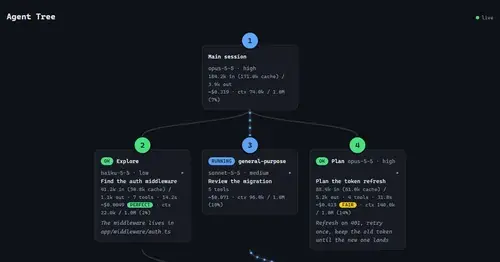
agent-tree
Live tree of the main session and its subagents: model, tokens, tools and cost.
Spark HUD
Context, plan limits with a pace forecast, cost and live subagents above the prompt.
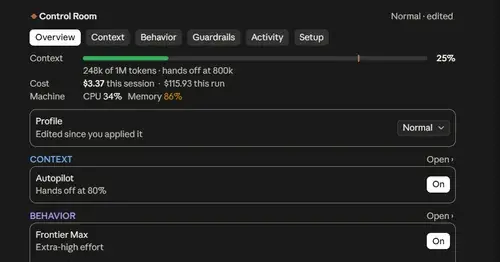
Project Sentinel
Status bar, Control Room pane and automatic context handoffs for long Claude Code runs.
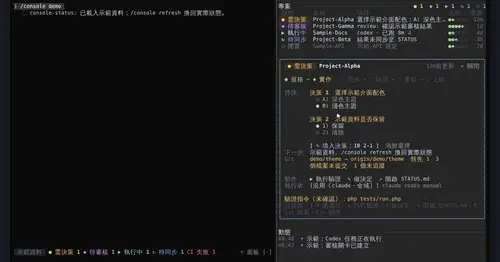
console-status
Every project in one pane: decisions, Git, CI, usage and dispatch to Claude or Codex.
Popular Claude Mods
The whole directory →cache-keeper
Prompt-cache timer, keep-warm pings, cold-send guard, a board of chats and a handoff.
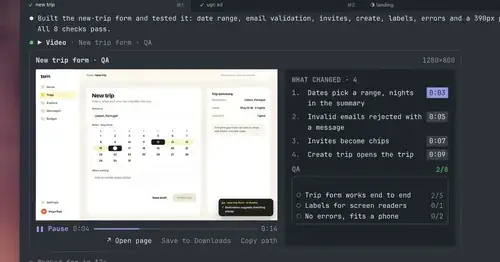
show-your-work
Claude shows screenshots and recorded Playwright runs in the chat, with before/after QA.
fast-jev-compaction
Compaction that drops stale tool calls instead of summarizing; the rest stays verbatim.
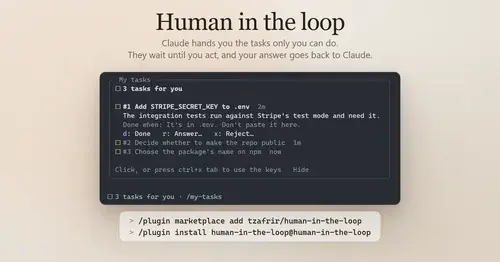
Human in the loop
Claude assigns you what only you can do. Tasks wait in a pane until you answer.